SpaceX flies from Cape Canaveral, Kennedy Space Center, Vandenberg and Starbase — often several times a week. Starlink missions dominate the cadence, with crew flights, cargo runs and Starship tests in between. See all launches worldwide →
Every active launch site this window, sized by upcoming missions. The red pulse is the next liftoff — tap a dot to see its launches.
—
Launch times shift often. Dates render in your local timezone and refresh from live data.
Reading the board
01
Go / TBC / TBD
Go means the launch is confirmed for the time shown. TBC is a targeted date awaiting official confirmation, and TBD means the team is still working toward one — treat it as a placeholder. A Starlink time can slip three times in an afternoon for weather, range traffic or a sensor reading. That's not drama; that's rocketry.
02
NET — No Earlier Than
Launch times are published as NET: the earliest possible liftoff. A mission may fly hours into its window, but never before NET. Every time on this board is already converted to your timezone — no UTC math at 4 a.m.
03
T‑minus and holds
“T−” counts to ignition. Crews build planned holds into the clock (T−9:40 for a Falcon 9 static-check, T−10 for many crewed flights), so T‑time and wall-clock time drift apart. The big countdown here tracks the official NET and re-syncs whenever an agency revises it.
04
Where the data comes from
Every schedule on this site streams from Launch Library 2, the open API maintained by The Space Devs and used by most mission-tracking apps. A refresh job pulls a new copy every 6 hours; your browser tops it up with live data on each visit.
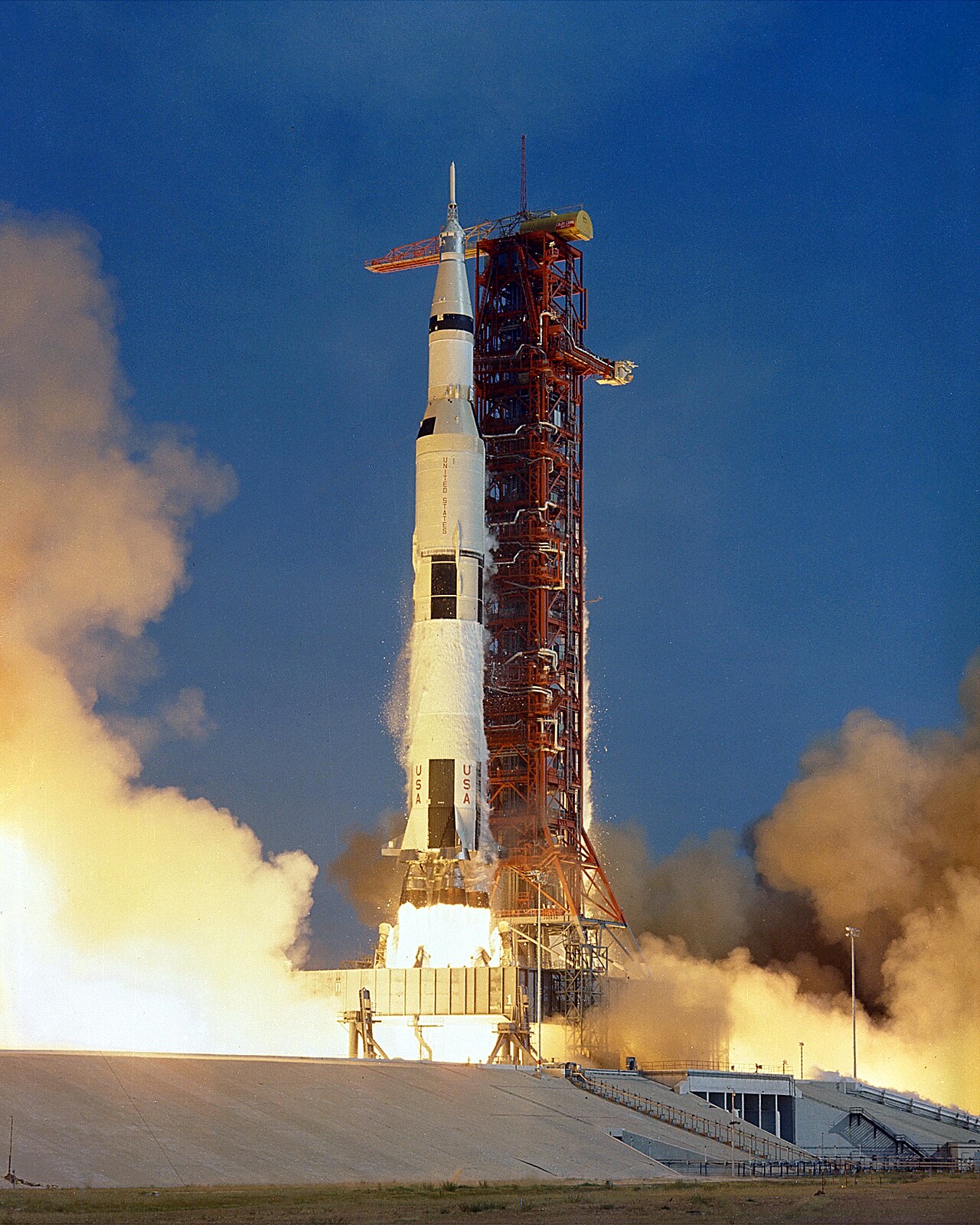
SA‑506 · Saturn V · Apollo 11 · LC‑39A, July 16 1969, 13:32 UTC.
Photo: NASA (public domain)